




























Tunnel Rush 2 Unblocked
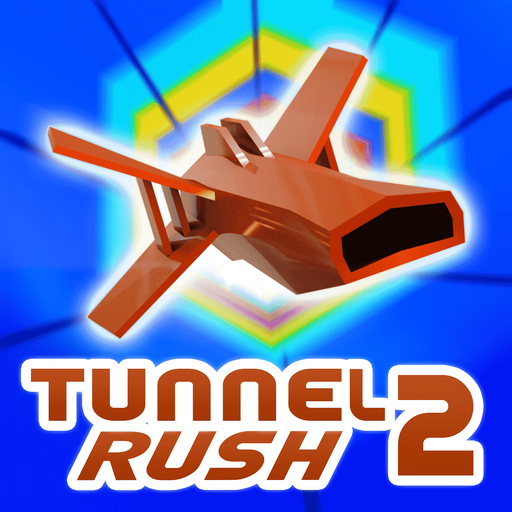
Tunnel Rush 2 sends you down a tunnel at speed with two inputs — left and right — and asks you to thread the gaps in whatever the tunnel puts in front of you. Speed is the difficulty: the geometry is not complicated, but you meet it faster than you can comfortably read it.
It is not an endless runner. The build has discrete levels with a completion sound for finishing one, so a run has an end rather than only a score, and gems are scattered through the tunnel to collect on the way. That gives each level a second objective beyond simply surviving it.
There is a crash sound, a smash sound and a trigger sound in the build alongside those, and the whole thing runs on a WebAssembly engine, which is why it holds its frame rate at the speeds it reaches.
How to play Tunnel Rush 2?
Steer in small, early movements rather than waiting until a gap is close, because at full speed a late correction always overshoots. Take gems that are on or near your line and leave the rest; a detour at this speed costs more than the collectible is worth. Watch the far end of the tunnel rather than the walls beside you — the shape you need to be in is visible several seconds before you reach it.
Controls
Desktop: Use the left and right arrow keys or A and D to steer.
Tunnel Rush 2 unblocked in your browser
Tunnel Rush 2 runs unblocked in any modern browser — just load the page and play. No download or setup is needed, which means it works even on school and office networks that block gaming sites.
Similar games on Speghetti Edition
- Tiny Fishing is a compact progression game that stays compelling because upgrades clearly change each run.
- Run 3 is a long-running platform favorite built around momentum, route reading, and repeat attempts.
- Monkey Mart is a management game where small efficiency upgrades steadily transform the whole loop.
Who created Tunnel Rush 2?
Tunnel Rush 2 was created by Deer Cat.
Can I play Tunnel Rush 2 on mobile devices and desktop?
Tunnel Rush 2 runs in your browser on desktop. Mobile support depends on the embedded version and how well its controls translate to touch devices, so performance and usability can vary between phones, tablets, and computers.